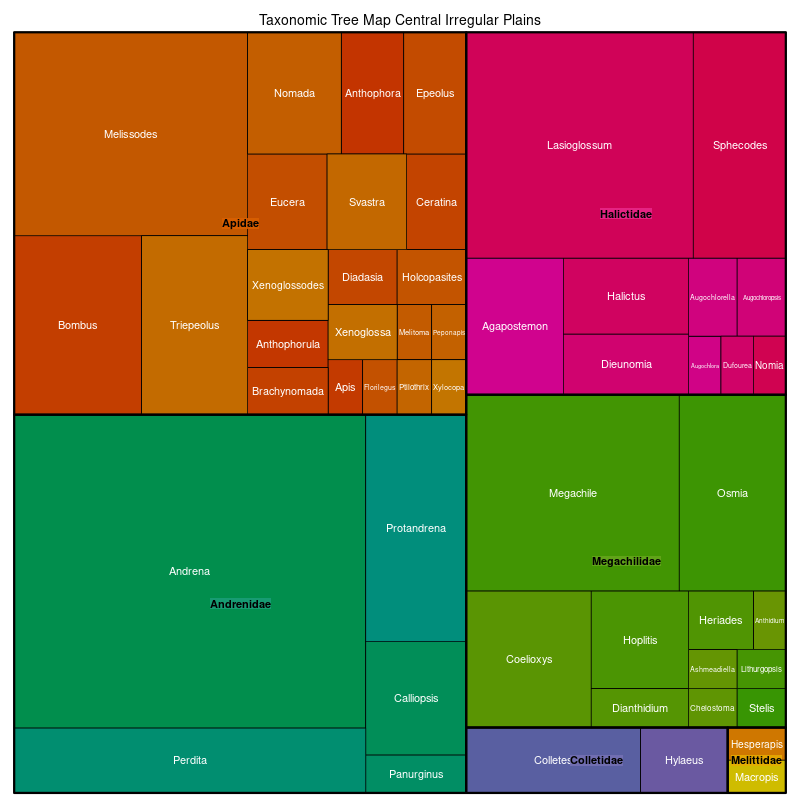
Pollen Project Mapping
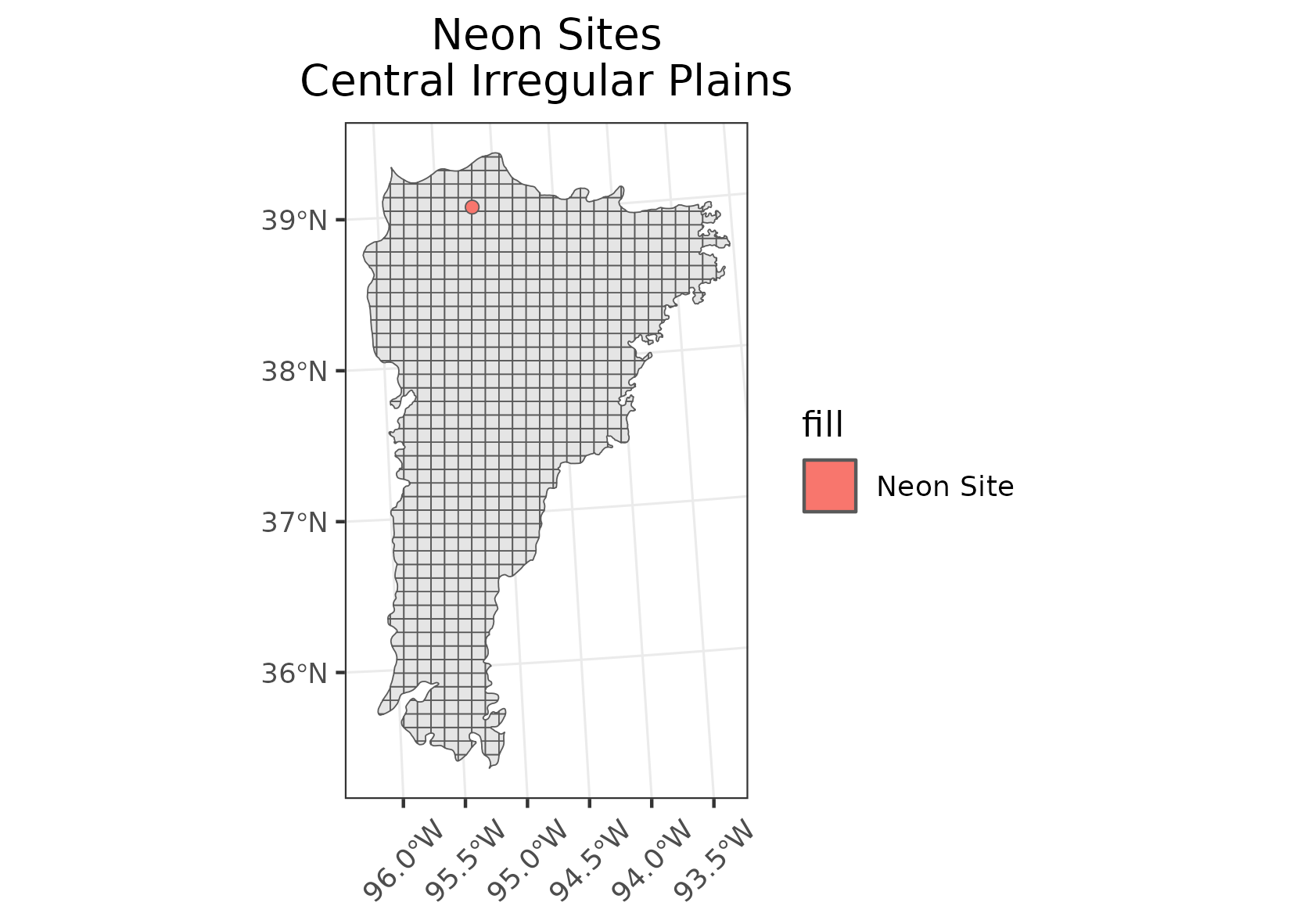
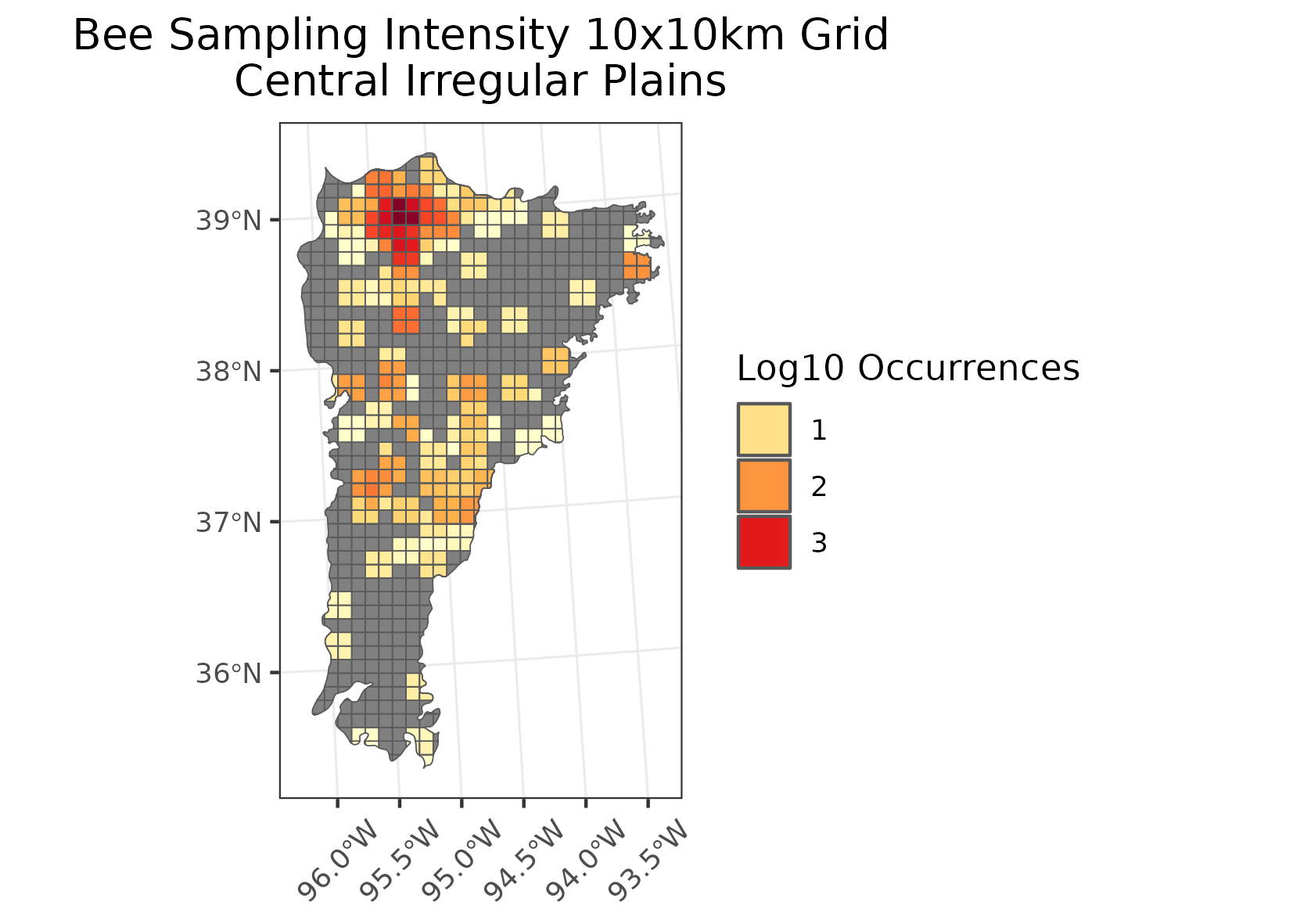
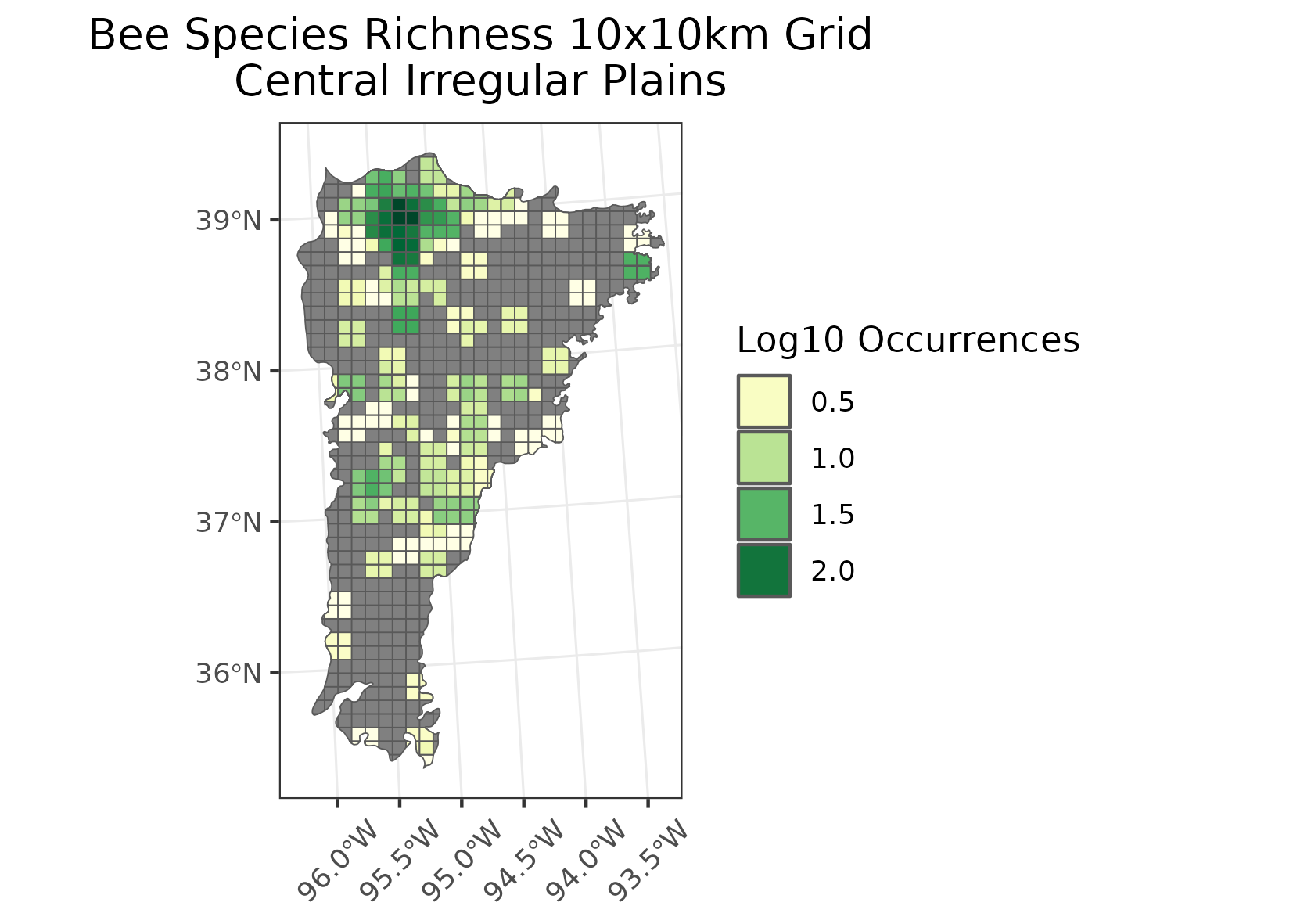
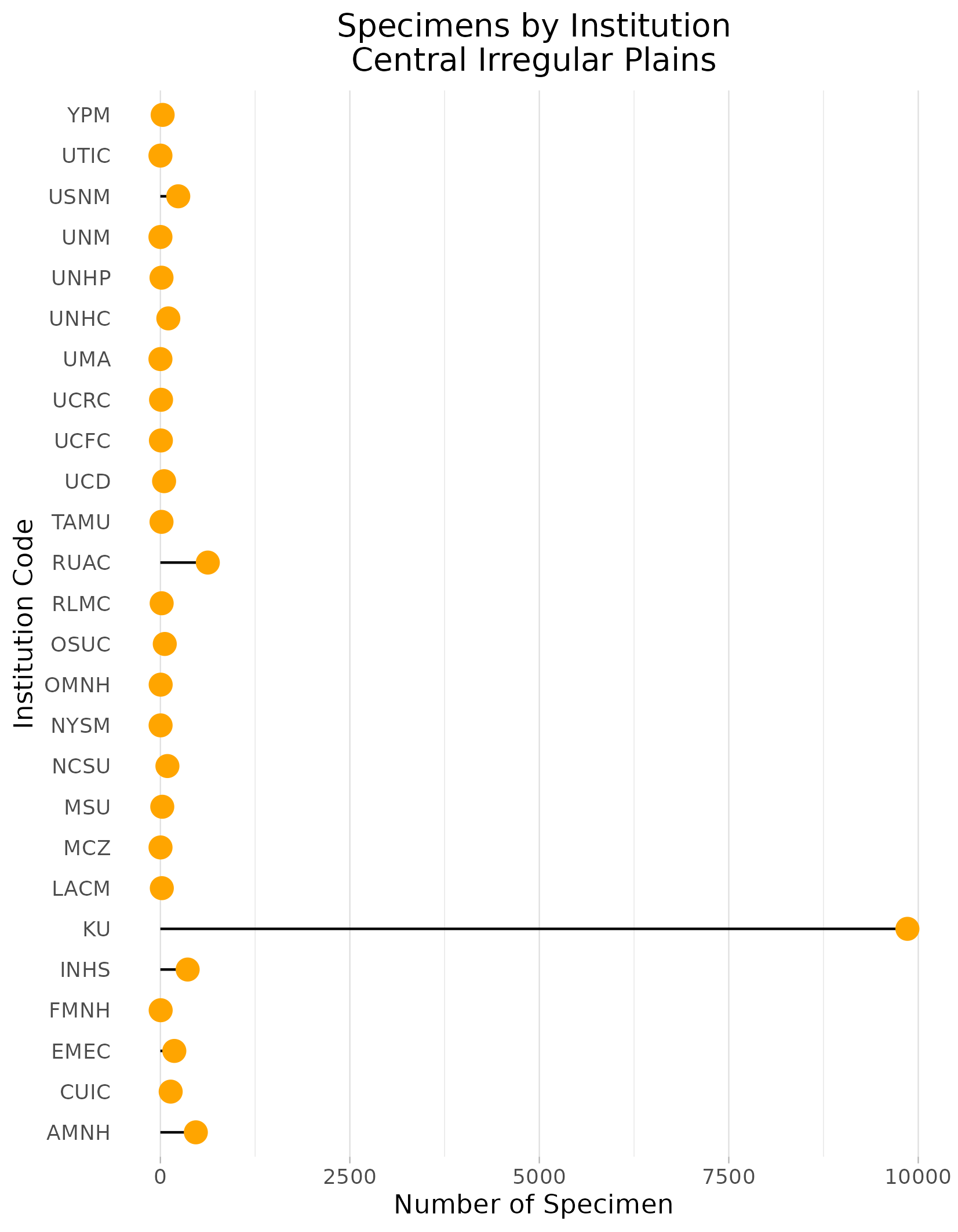
Central Irregular Plains
Location: Southern Iowa, northern and western Missouri, eastern Kansas, and northeastern Oklahoma.
Climate: The ecoregion has a severe mid-latitude humid continental climate in the north and milder humid subtropical to the south. It is marked by hot summers and mild to cold winters. The mean annual temperature is approximately 10C to 16C. The frost-free period ranges from 165 to 235 days. The mean annual precipitation is 983 mm, ranging from 865 mm to 1145 mm. Most of the rain falls during the growing season. Snow occurs in winter.
Vegetation: The historical vegetation is a grassland/forest mosaic with wider forested strips along the streams compared to Ecoregion 9.2.3 to the north. Tallgrass prairie with little bluestem, big bluestem, switchgrass, and Indiangrass, and some oak-hickory woodlands with red oak, white oak, bur oak, chinkapin oak, post oak, shagbark hickory, and bitternut hickory.
Hydrology: Perennial streams are common; in some areas many are channelized. Some large rivers cross the region. A few large reservoirs occur. Groundwater is highly mineralized in some areas.
Terrain: Rolling and irregular plains, topographically more irregular than the Western Corn Belt Plains (9.2.3) to the north, The region, however, is less irregular than the ecoregions to the south and east. Some cuestas and low hills. Geology is mostly Pennslyvanian-age sandstone, shale, limestone, and coal. Loess over clayey glacial drift in the north, Mollisols and Alfisols are typical, with mesic and thermic soil temperatures and udic and aquic soil moisture regimes.
Land Use: A mosaic of land use with cropland, woodland, and grassland. Agriculture includes production of corn, soybeans, wheat, alfalfa, hay, grain sorghum, cattle, and broiler chickens.
Oil and gas production and mining of high-sulfur bituminous coal occurs. The disturbance of coal strata in southern Iowa and northern Missouri has degraded water quality and affected aquatic biota. Larger towns and cities include Ottumwa, Kirksville, Mexico, Warrensburg, Topeka, Lawrence, Fort Scott, Independence, Miami, Claremore, Tulsa, Broken Arrow, and Muskogee.
Note that the above fields were quoted directly from: Wiken et al. 2011 (see front page for full citation).